

Date:2026-05-14 Click:452
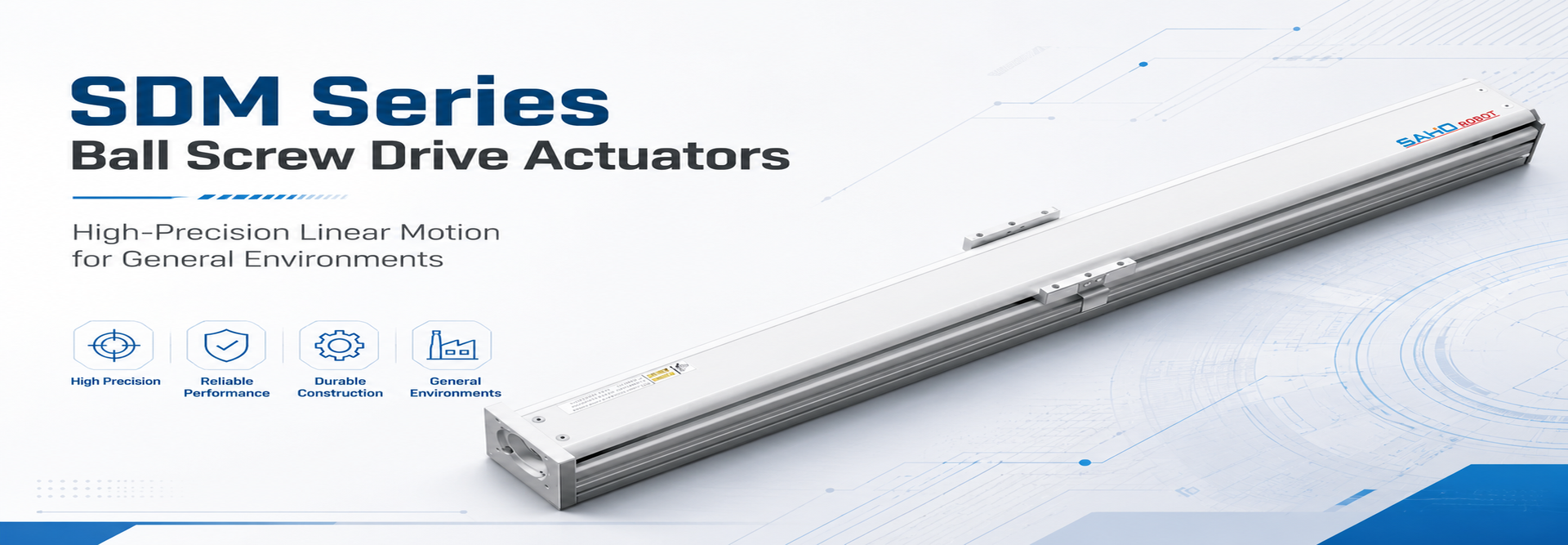
A wrong axis choice rarely fails on the first trial. Instead, it starts with small signs: a fixture shakes after stopping, the tooling plate needs frequent adjustment, the servo alarms during acceleration, or the final position drifts after several shifts. Therefore, choosing a ball screw linear actuator should begin with the real factory task, not only with a load number or a catalog table. This guide explains how engineering teams can judge load, stroke, speed, accuracy, mounting direction, motor matching, environment, and inquiry data in a practical way.
Why Axis Selection Feels Simple but Fails Later
At the design desk, a linear axis can look like a standard purchased part. A drawing shows a carriage, a stroke, a motor side, and several mounting holes. However, the real machine tells a different story after it starts running.
For example, a fixture may move smoothly during no-load testing. Later, after the real workpiece, cable chain, sensor bracket, and tooling plate are installed, the same axis begins to shake. As a result, the station loses the clean stop that the process needs.
In another case, the selected stroke may match the visible working travel. However, during commissioning, the team still needs extra space for home position, tooling clearance, and safe deceleration. Therefore, the original stroke becomes too tight.
The same problem also appears with speed. A catalog speed value looks attractive, yet the machine may only move 80 mm. In that short travel, acceleration, deceleration, and settling time matter more than the highest theoretical speed.
This is why selection should not start from a single parameter. A stable axis must match the motion rhythm, the real load, the mounting posture, the process force, and the service environment. Otherwise, the machine may pass an early test but become difficult to keep stable after normal production begins.
Selection tip: A stable selection should answer one clear question first: what must the axis do every cycle, under real load, in the real installation direction, after many hours of operation?
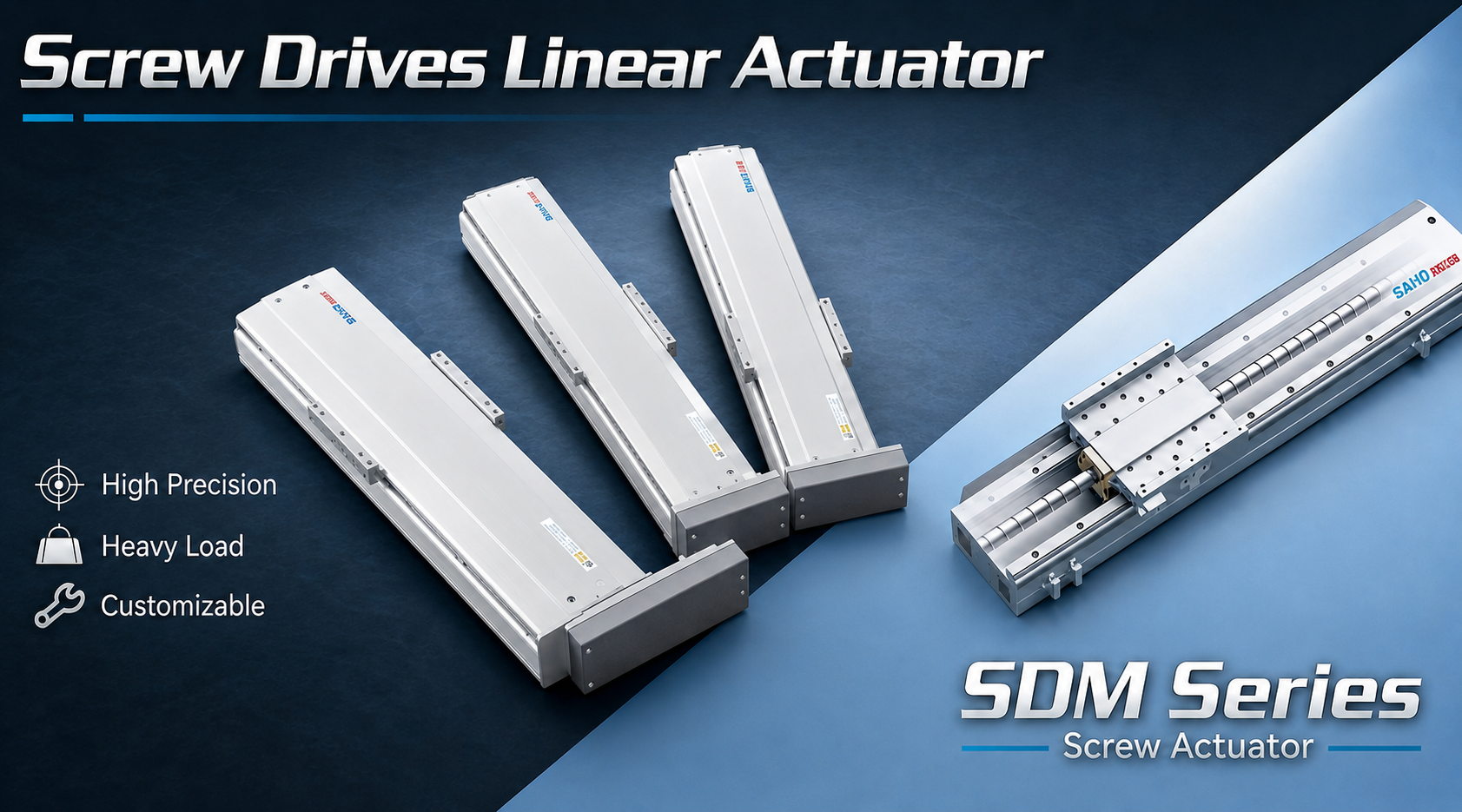
SDM Series screw drive module for compact automation positioning. The image links to the SDM Series category page for model comparison.
What Screw-Driven Linear Modules Do in Automation Equipment
In production equipment, linear motion is rarely just “move from A to B.” The carriage must carry a fixture, resist process force, stop at a usable point, and repeat the same motion across many cycles. Therefore, a screw-driven module works as both a motion component and a stability component.
Inside a typical station, the module converts motor rotation into straight travel. Meanwhile, the guide structure supports the moving plate and helps keep the tooling aligned. This combination is useful in assembly, inspection, dispensing, indexing, pressing support, and small transfer tasks.
For engineering teams, the main value is predictable motion. A ready module reduces custom machining work, shortens mechanical design time, and gives a cleaner base for motor mounting, sensors, cable chains, and tooling plates.
Moreover, a modular axis makes future machine copies easier. Once one station runs well, the same structure can be repeated with less risk. This matters in factories where one proven workstation may later become five or ten similar lines.
In daily production, this kind of stability feels practical. The fixture reaches the same place, the inspection point stays aligned, the cable route does not fight the motion, and the maintenance team can find the adjustment points without removing half of the machine.
When Screw Drive Is the Better Choice
Different linear motion structures have different strengths. A belt-driven axis can fit long travel and high-speed transfer. A linear motor axis can serve demanding high-speed precision work. However, a screw-driven module often fits best when compact travel, controlled thrust, and stable positioning are more important than maximum distance.
For example, a small assembly station may need a fixture to stop under a camera before a part is checked. The travel may be short, but the stop must be repeatable. In that case, screw drive can provide a firm, controlled movement path.
At the same time, screw drive is useful when tooling touches the product. In insertion, pressing, and light force processes, the axis must resist reaction force. Therefore, rigidity and guided support become more important than fast travel alone.
In short, screw drive is usually a strong candidate for moderate stroke, medium load, accurate stop points, compact structure, and controlled process motion.
Key Checks: Load, Stroke, Speed, Accuracy, and Installation Direction
A reliable selection starts with five checks. These checks are load, stroke, speed, accuracy, and installation direction. Each one looks simple alone, yet they affect each other inside the real machine.
Load does not only mean the workpiece. It also includes the moving plate, fixture, gripper, nozzle, camera bracket, cable chain, sensors, fasteners, and any added tooling. Therefore, a practical load estimate should include the complete moving assembly.
Stroke should include more than the visible process distance. It should also include home position, loading clearance, sensor adjustment, deceleration space, and possible tooling changes. Otherwise, the station may feel cramped during commissioning.
Speed is often misunderstood. A catalog value may describe a possible travel speed, but the real process cares about cycle time. Therefore, acceleration, deceleration, and settling time should be reviewed together.
Accuracy should be defined at the point where the process happens. A module may repeat well at the carriage, yet a long bracket or flexible tooling plate can reduce final process accuracy.
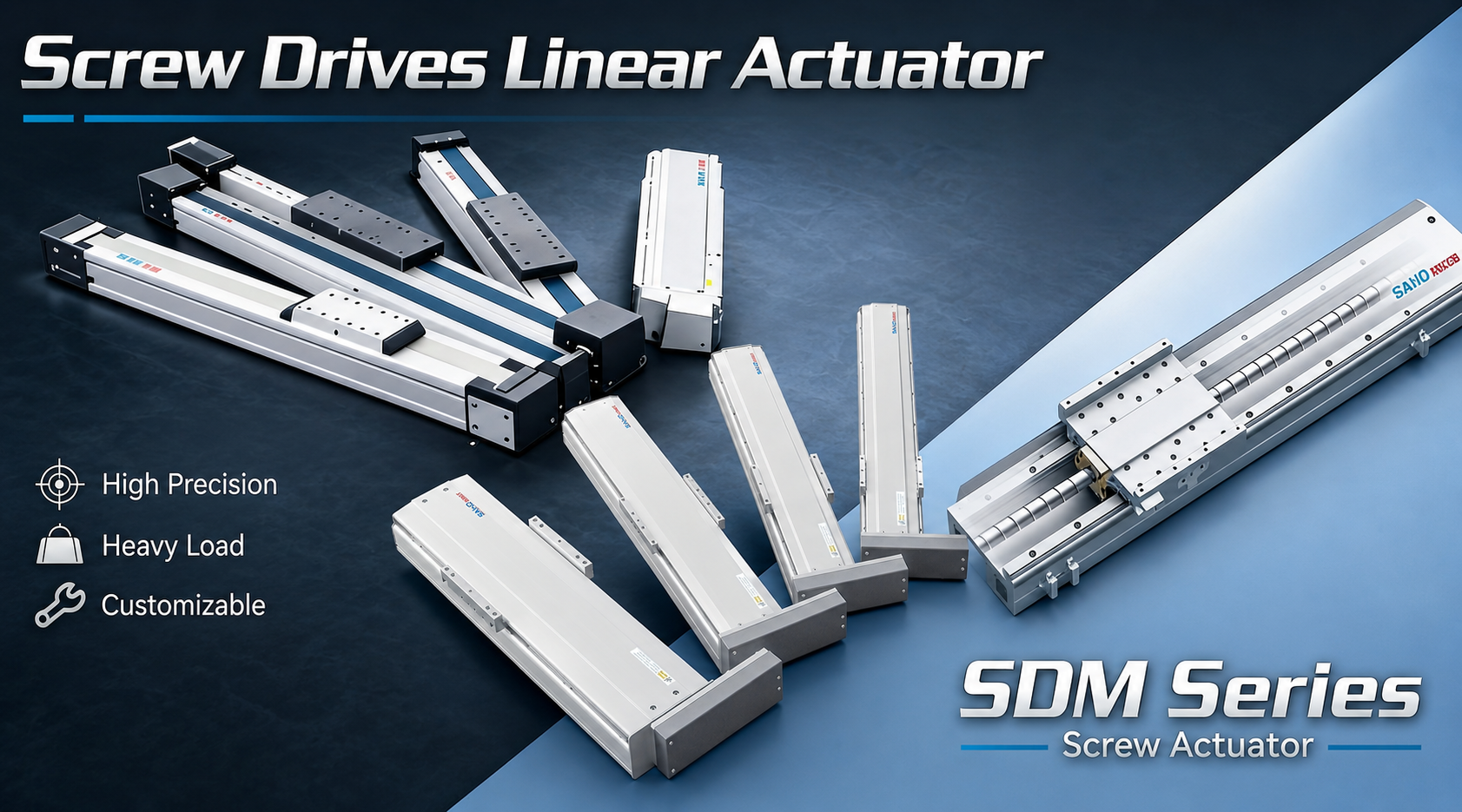
For practical selection, load, stroke, speed, accuracy, and mounting direction should be reviewed as one motion system.
Motor, Sensors, and Control Details That Affect Real Performance
A linear module does not work alone. It works with a servo motor, driver, controller, coupling, sensors, cables, and machine program. Therefore, motor and control details should be discussed before final mechanical approval.
A servo ball screw actuator is often chosen when the station needs repeatable positioning and controlled motion. However, motor power alone does not guarantee good results. The screw lead, moving mass, acceleration target, inertia ratio, and mounting stiffness all matter.
In addition, the motor interface affects the physical design. Flange size, shaft diameter, coupling length, cable outlet direction, and brake option can all change the final assembly. Therefore, motor brand and frame size should be confirmed early.
Environment and Maintenance Planning
A module that works well in a clean test room may face a harder life on the factory floor. Dust, oil mist, chips, temperature change, vibration, and cleaning routines can all affect motion quality. Therefore, the working environment should be part of selection.
In high-output lines, easy lubrication access, cable control, sensor access, and dust protection can decide whether the selected actuator stays stable after months of operation.
Application Scenarios and SAHO Model Fit
A precision automation actuator should match the station’s purpose. A small inspection axis, a vertical lifting axis, and a tooling transfer axis may all need screw-driven motion. However, their model choices can be different.
For broader project planning, SAHO linear motion solutions can support different motion structures across automation equipment. The key is to connect each series with the real process duty.
The Electronic Component Assembly application page can still be used as a reference for precision motion planning, but the article does not need a separate industry image here.
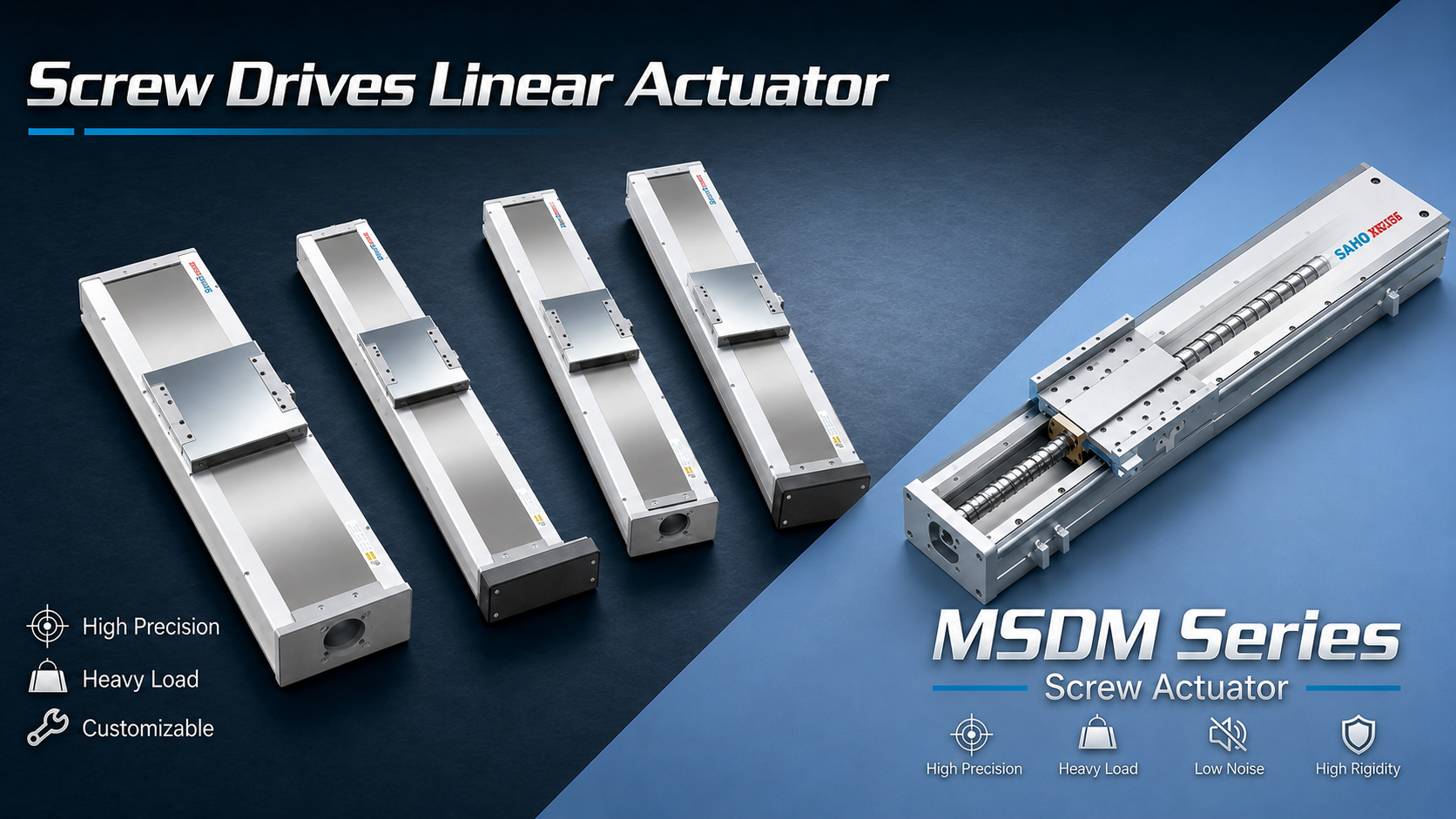
MSDM Series can be considered when the equipment layout needs a compact screw-drive module structure with practical installation and model matching flexibility.
Selection Checklist Before Sending an Inquiry
A clear inquiry saves time. It also helps engineers avoid wrong model recommendations. Therefore, the best inquiry includes the real machine task, not only a product name.
Mechanical data
| Motion data
|
Electrical data
| Environment data
|
Extended Reading
SDM Series Review screw-drive modules for general automation environments. | MSDM Series Compare compact screw-drive module choices for automation equipment. | Electronic Component Assembly See an application direction for precision motion planning. |
FAQ
Q1. What data should be prepared before selecting a screw-drive module?
The most useful data includes total moving load, payload center, stroke, required move time, repeatability target, mounting direction, process force, motor preference, and working environment.
Q2. When is screw drive better than belt drive?
Screw drive is often better when compact travel, controlled thrust, repeatable stopping, and higher rigidity are required.
Q3. How can SAHO support early model selection?
SAHO can review application data such as load, stroke, speed, accuracy, installation direction, motor interface, and environment. For screw-drive automation planning, the ball screw linear actuator series page can be used as the main category reference before final confirmation.
Ask SAHO for Application-Based Selection Support
For a faster model review, prepare load, stroke, speed, accuracy, installation direction, motor preference, and working environment. SAHO can use this information to help match the motion structure with the real automation task.







-
-
 English
 -
 Français
 -
 Deutschland
 -
 Italia
 -
 Polska
 -
 España
 -
 Русский язык
 -
 日語
日語 -
 한국
한국 -
 Türkiye
 -
 português
 -
 بالعربيةês
 -
 Tiếng Việt
 -
 คนไทย
คนไทย -
 简体中文
简体中文 -
繁體中文
-